Jamiat Ulama-i-Hind Concludes Biannual Session in Port Blair, Unveiling Roadmap for Organisational Strengthening, Youth Development, and 1,450 Model Mosques
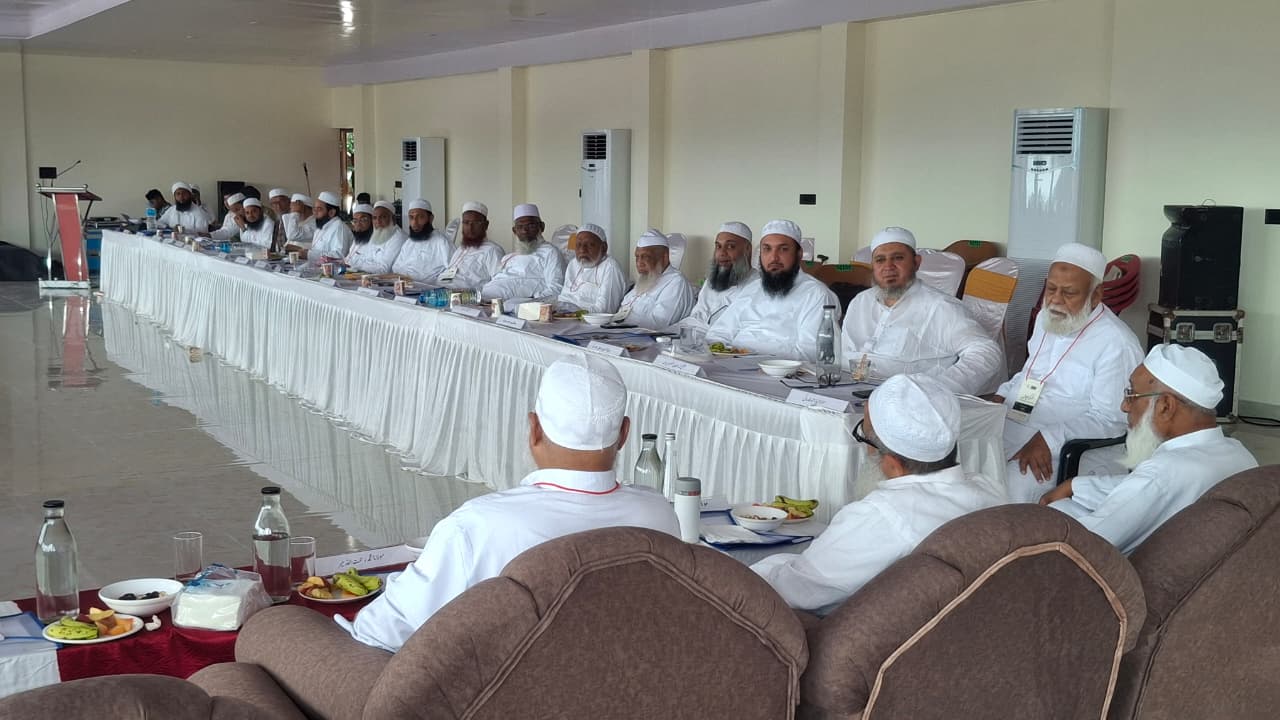
Port Blair / Andaman and Nicobar, April 15, 2026: The three-day eighth central biannual consultative session of Jamiat Ulama-i-Hind concluded on Wednesday following a series of important deliberations and meetings.
The session was held at Hotel A.R. Pride Residency, Junglighat, Vijaypuram, South Andaman. Different sessions were chaired by senior office-bearers from various States, while the proceedings were conducted by the General Secretary, Maulana Mohammad Hakimuddin Qasmi.
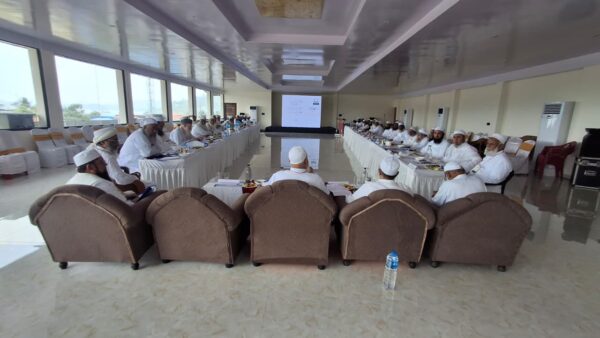
The meeting resolved to place organisational strengthening, expansion of the training department, and the induction of new workers among its priorities for the next six months. A new framework for the annual calendar, targets for model mosques and model district units, as well as revised training programmes from the central to the district level, was also approved.
Participants reaffirmed their commitment to making the organisation’s constructive programmes more effective and result-oriented at the grassroots level.
In his keynote address, Maulana Mahmood Asad Madani, president of Jamiat Ulema-i-Hind, said that the real strength of the organisation lay in its trained, sincere, capable, and disciplined cadre. He emphasised that merely associating individuals with the organisation was not sufficient; rather, their intellectual, practical, and organisational training had become the foremost need of the hour.
He said that the complex social, ideological, and national challenges of the present time could only be addressed through an organised strategy. Expressing particular concern over the younger generation, he noted that substance abuse, had emerged as major challenges for society.
Maulana Madani said that these challenges could be effectively addressed if young people were connected in time with the teachings of the Seerah of the Prophet ﷺ and his exemplary life. In this context, it was decided to expand the Seerah Quiz competition in a modern and effective manner across schools, colleges, and among the youth on a large scale so as to provide strong intellectual and moral guidance to the younger generation.
He also underlined the importance of organisational stability, mutual consultation, and consensus-building, stressing that meetings should be held regularly in accordance with the annual calendar — weekly at the local unit level, monthly at the district level, and once every three months at the State level.
Describing the “model mosque” initiative as an urgent need of the time, he said that if mosques were made the centre of all social, educational, and organisational activities, the community would derive immense benefit. In line with this vision, different State units collectively set a target of developing 1,450 mosques as model institutions over the next six months.
Addressing the session on social reform, Jamiat Vice-president Maulana Salman Bijnori, senior faculty member at Darul Uloom Deoband, said that social reform could not be achieved merely through speeches, and that active committees would need to be formed in every neighbourhood and locality.
He called for a sustained public campaign against extravagant wedding expenses, unnecessary rituals, and social evils, and proposed the establishment of a permanent institution for the training of mosque imams.
Speaking on the occasion, Maulana Rahmatullah Mir, president of the Standing Council of Jamiat Ulama-i-Hind, said that in the current climate of global uncertainty, it was imperative to adopt the values of balance, wisdom, and unity taught by the elders of the community. He emphasised the effective use of madrasas, mosques, and maktabs, and stressed the need to connect the younger generation with faith and the Seerah.
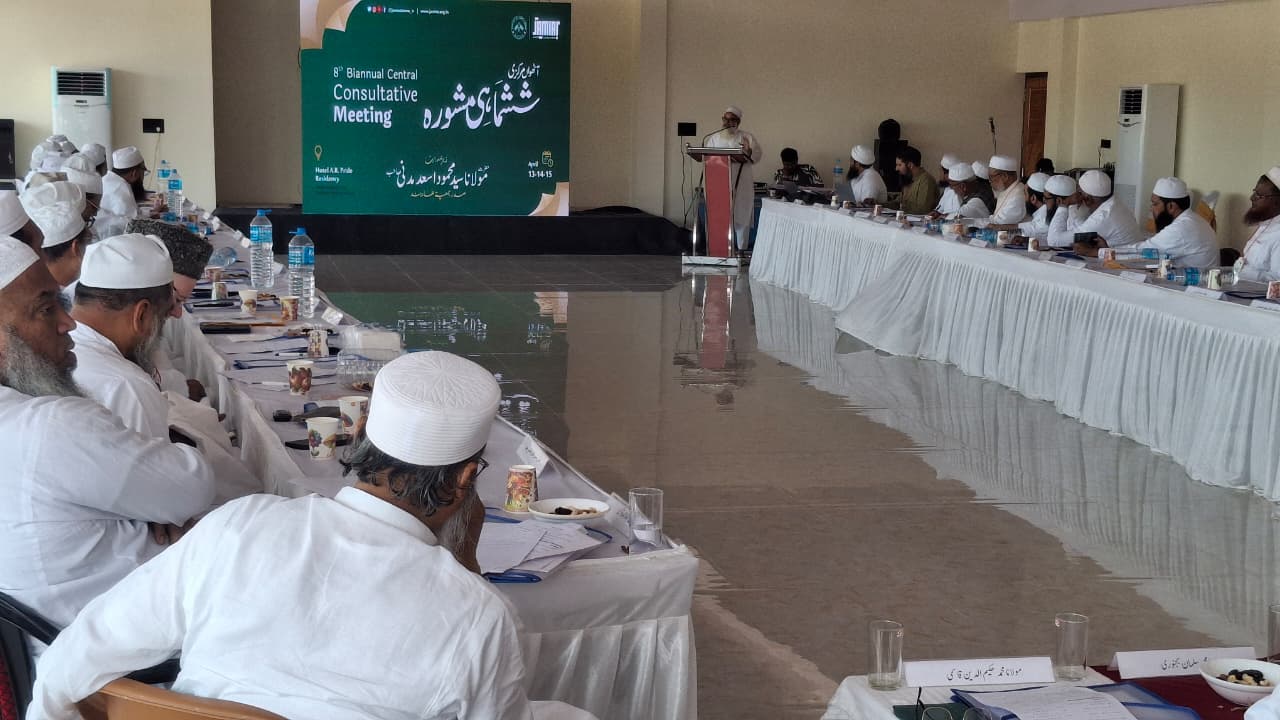
The session was also addressed by vice-president Maulana Qari Amin Pokaran, Haji Mohammad Haroon, president of the Madhya Pradesh unit, Maulana Qazi Abdul Majid, president of the Andhra Pradesh unit, Maulana Mufti Mohammad Affan Mansoorpuri, president of the Uttar Pradesh unit, Maulana Mufti Iftikhar Ahmad Qasmi, president of the Karnataka unit, Mufti Ahmad Deola, president of the Gujarat unit, Maulana Shamsuddin Bajli, senior office-bearer of the Karnataka unit, and Maulana Saeed, president of the Manipur unit, among other State office-bearers, all of whom shared their views and suggestions.
In his concluding remarks, Maulana Mahmood Asad Madani thanked the Andaman and Nicobar unit, the organisers, and all participants, and prayed that the consultative session would become a source of positive transformation for the community. Mufti Sharafuddin Qasmi, president of the Andaman and Nicobar unit, also extended special thanks to all guests, colleagues, and the hotel management for their support.