Sudan Takes Ethiopia to UN and African Union Over Alleged RSF Drone Attacks; Diplomatic Crisis Deepens
Urges International community to ensure enforcement of International Law against Ethiopia
KHARTOUM / ADDIS ABABA | November 4, 2026 : Sudan has formally escalated its dispute with neighbouring Ethiopia, filing complaints with both the United Nations Security Council and the African Union’s Peace and Security Council over alleged drone attacks launched from Ethiopian territory against civilian targets and critical infrastructure inside Sudan.
Khartoum accuses Ethiopia of allowing the paramilitary Rapid Support Forces (RSF), which has been fighting Sudan’s national army since April 2023, to use Ethiopian territory as a launching ground for drone operations targeting residential areas, public facilities and electricity installations across several Sudanese states.
In its formal complaint, Sudan’s Foreign Ministry said it had submitted documents and supporting evidence which, according to the government, demonstrate that RSF forces were using Ethiopian territory to launch explosive-laden and missile-equipped drones against Sudanese targets.
The ministry described the alleged use of Ethiopian territory as a hostile act and a violation of Sudan’s sovereignty and territorial integrity. It called on Addis Ababa to immediately stop what it termed hostile activities and urged the international community to ensure accountability under international law.
Sudan Reports 70 Attacks Involving 187 Drones
The diplomatic move follows the publication of a report by Sudan’s army-aligned Transitional Sovereignty Council, which claims to have documented 70 drone attacks involving 187 one-way attack drones between February 15 and October 27, 2026.
According to the Sudanese report, the alleged attacks resulted in 484 civilian casualties—killed or wounded—as well as the deaths of 176 Sudanese soldiers and injuries to approximately 200 others.
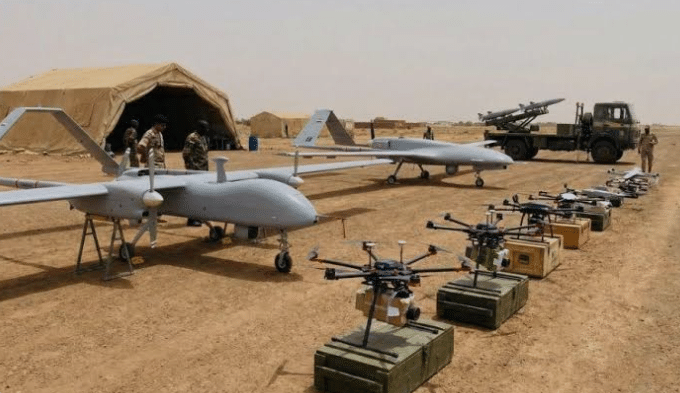
The report alleges that the drones targeted residential complexes, hospitals, fuel facilities and electricity infrastructure. Sudanese authorities have also identified several locations inside Ethiopia, including Asosa Airport, the Kurmuk-Gizen border area and Bahir Dar airbase, as alleged launch or operational points.
Khartoum has further linked recent drone strikes to damage at approximately 13 to 14 electricity facilities across several states, including Khartoum, Al-Jazirah, Sennar and Al-Gedaref. The attacks have reportedly disrupted electricity supplies and affected essential services.
One particularly serious incident cited by Sudanese authorities was an October 9 attack on displaced families in the Wad el-Mahi area of Blue Nile State. The government claims that 30 civilians, including 26 women and four children, were killed and around 100 others injured.
These figures and the alleged launch locations have been presented by Sudanese authorities and have not been independently verified in their entirety.
Sudan Accuses Ethiopia of Violating International Law
In its complaint, Khartoum argues that allowing armed groups to use a neighbouring country’s territory to attack civilian locations and vital infrastructure constitutes a serious breach of international obligations.
Sudan has invoked the United Nations Charter, particularly Article 2(4), which prohibits the threat or use of force against the territorial integrity or political independence of any state.
The Sudanese government has called on both the UN Security Council and the African Union Peace and Security Council to condemn the alleged attacks, demand an end to the use of Ethiopian territory for military operations against Sudan, and take appropriate measures to uphold Sudan’s sovereignty.
A legal clarification: Article 2(4) is the relevant provision of the UN Charter concerning the prohibition on the use of force. The reference in some versions of Sudan’s statement to Article 4(2) appears to be an incorrect citation.
Ethiopia Rejects Allegations; Counter-Accuses Sudan
Ethiopia has previously rejected accusations that it is supporting the RSF or permitting its territory to be used for attacks against Sudan. Addis Ababa has maintained that it respects Sudan’s sovereignty and territorial integrity.
The Ethiopian government has, in turn, accused Sudan’s military of supporting armed groups linked to the Tigray People’s Liberation Front (TPLF), which has been involved in conflict with Ethiopian federal forces. Sudan has rejected these allegations.
The competing accusations have deepened mistrust between the two neighbouring countries, raising concerns that Sudan’s internal conflict could increasingly spill across international borders.
In a further sign of deteriorating relations, Reuters reported on November 4 that Ethiopia had ordered six Sudanese consulate staff in the border town of Assosa to leave the country within 48 hours. The Ethiopian authorities had not publicly provided a reason for the expulsion, according to the report.
Sudanese presidential adviser Amjad Farid said Khartoum remained committed to defending its territory while making every effort to avoid an open conflict with Ethiopia.
A Wider Regional Crisis in the Making?
The latest confrontation is unfolding against the backdrop of Sudan’s devastating civil war, which began in April 2023 following a power struggle between the Sudanese Armed Forces and the RSF.
The conflict has devastated large parts of the country, displaced millions of people and triggered one of the world’s most severe humanitarian emergencies.
Ethiopia’s own security challenges, including tensions involving the Tigray region, add another layer of instability. The growing diplomatic confrontation also raises concerns about the possibility of regional and external actors becoming more deeply involved in the Sudanese conflict.
The situation is particularly sensitive because any direct military confrontation between Sudan and Ethiopia could destabilise an already fragile Horn of Africa region.
For now, the key question is whether the United Nations and the African Union will initiate an independent examination of Sudan’s evidence and press both governments to avoid further escalation.
The stakes extend far beyond a diplomatic dispute. If Sudan’s allegations are substantiated, the use of a neighbouring country’s territory for attacks on civilian infrastructure would represent a serious regional security crisis. If the allegations remain unverified, the growing exchange of accusations and retaliatory diplomatic measures could still push relations between the two countries towards a dangerous confrontation.
The drone dispute illustrates how a prolonged civil war can destabilise an entire region when armed groups obtain long-range weapons and neighbouring countries become entangled in competing security interests.
The central danger is that Sudan’s internal war could evolve into a broader regional confrontation. Preventing that outcome will require credible evidence, restraint by both governments and sustained diplomatic pressure to protect civilians and preserve regional stability.