


Deadly RSF Drone Strikes Expose Sudan–Ethiopia Rift as Regional Tensions Escalate
Khartoum takes allegations of cross-border attacks to the UN and African Union, while Addis Ababa denies involvement and accuses Sudan of supporting Ethiopian rebels.
KHARTOUM / ADDIS ABABA, November 4, 2026 — Sudan’s devastating civil war is increasingly threatening to spill across its international borders, as deadly drone attacks and escalating diplomatic accusations expose a deepening rift between Sudan and neighbouring Ethiopia.
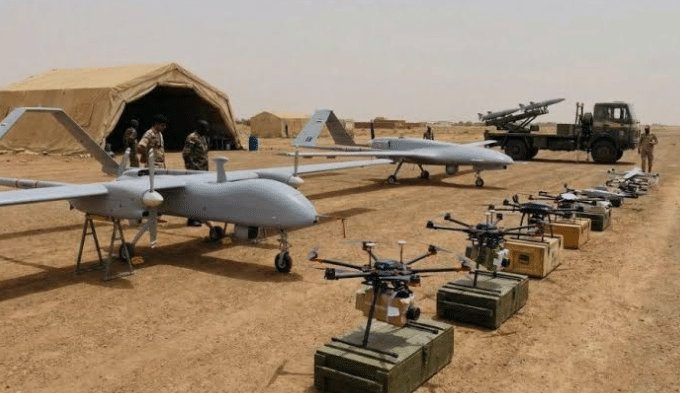
Sudan’s military-backed government has accused Ethiopia of allowing the Rapid Support Forces (RSF), the paramilitary group fighting Sudan’s armed forces since April 2023, to launch drone attacks from Ethiopian territory against civilian infrastructure and military targets inside Sudan.
Khartoum has formally taken its allegations to the United Nations Security Council and the African Union’s Peace and Security Council, describing the alleged use of Ethiopian territory for attacks as a violation of Sudanese sovereignty and international law.
Ethiopia, however, has rejected accusations of supporting the RSF and has levelled counter-accusations against Sudan, alleging that the Sudanese military is assisting fighters linked to the Tigray People’s Liberation Front (TPLF), a group that fought a devastating war against Ethiopia’s federal government between 2020 and 2022.
Neither side’s allegations should be treated as independently established facts. Nevertheless, the increasingly hostile exchanges have raised concerns that Sudan’s internal conflict could develop into a wider regional confrontation.
Sudan alleges attacks launched from Ethiopian territory
According to a report prepared by Sudan’s Transitional Sovereignty Council and presented by government officials, 70 attacks involving 187 one-way attack drones were recorded between February 15 and October 27, 2026.
The Sudanese report identified several alleged launch locations inside Ethiopia, including Asosa Airport in the west, the Kurmuk-Gizen border area and Bahir Dar airbase in the Amhara region.
Sudanese authorities say the attacks have targeted electricity installations, residential areas, hospitals, fuel facilities and other essential infrastructure.
The frequency of the reported attacks appears to have increased. According to the same account, October alone saw 28 attacks involving 97 one-way drones.
Sudan has also reported extensive damage to its electricity network. Attacks on power stations and distribution facilities across Khartoum, Al-Jazirah, Sennar, Gedaref and other areas have disrupted electricity supplies, threatening hospitals, water services, businesses and households.
The Sudanese authorities have attributed hundreds of deaths and injuries to the wider drone campaign. However, casualty figures vary between official reports, and the full toll has not been independently established.
The allegations are particularly serious because long-range drones allow armed groups to strike targets far from the front lines, potentially transforming neighbouring territory into a strategic launchpad for attacks.
Ethiopia rejects accusations and counters with its own claims
Addis Ababa has denied facilitating attacks against Sudan and has described earlier accusations of Ethiopian involvement as baseless.
Ethiopian officials have instead accused Sudan’s military of supporting Tigrayan fighters and other groups hostile to Ethiopia’s federal government. Khartoum rejects those allegations.
The exchange of accusations reflects a broader deterioration in relations between the two neighbours, whose security interests are increasingly intertwined with the outcome of Sudan’s civil war.
The key unresolved question is whether the drone attacks can be conclusively traced to locations inside Ethiopia and, if so, whether this demonstrates official Ethiopian involvement, assistance from individual actors or the unauthorised use of territory by armed groups.
Establishing responsibility would require independently verifiable evidence, including drone wreckage analysis, flight records, satellite imagery and corroborated intelligence.
Sudan says it has compiled technical and military evidence to support its case. Ethiopia’s denials, meanwhile, mean that the allegations remain a major point of diplomatic dispute.
A civil war with devastating humanitarian consequences
Sudan’s conflict began in April 2023 following a power struggle between the Sudanese Armed Forces (SAF), led by General Abdel Fattah al-Burhan, and the RSF, led by Mohamed Hamdan Dagalo, widely known as Hemedti.
The confrontation grew out of disagreements over military integration and the distribution of political and security power during Sudan’s troubled transition following the removal of longtime ruler Omar al-Bashir in 2019.
What began as a struggle for control of the state has evolved into a nationwide conflict involving territorial battles, competing administrations, external support networks and repeated allegations of atrocities.
Millions of people have been displaced, while food shortages, collapsing healthcare services and the destruction of civilian infrastructure have created one of the world’s most severe humanitarian emergencies.
Drone warfare has added another dangerous dimension to the conflict. Both the army and the RSF have increasingly used unmanned aircraft to strike positions and infrastructure, exposing civilians to attacks far from conventional battlefields.
A strike on displaced families in Sudan’s Blue Nile region near the Ethiopian border reportedly killed 30 people, including 26 women and four children, according to figures cited by Sudanese authorities. Other reported attacks have caused civilian casualties in Darfur and around the capital.
The United Nations has condemned the devastating impact of drone warfare on civilians and warned against attacks that endanger civilian lives and essential services.
Regional rivalries complicate the crisis
The Sudan–Ethiopia dispute cannot be understood solely through the immediate allegations surrounding drone attacks. Several longstanding geopolitical tensions are also shaping the relationship.
1. The Nile water dispute
Sudan and Ethiopia have longstanding disagreements over the Grand Ethiopian Renaissance Dam (GERD), built by Ethiopia on the Blue Nile.
Ethiopia regards the dam as a major development project intended to expand electricity generation and support economic growth. Downstream countries, particularly Egypt and Sudan, have raised concerns about water management, the effects of drought and the coordination of dam operations.
The dispute has not independently caused the current military crisis, but it contributes to a wider climate of mistrust.
2. The Tigray question
Ethiopia remains concerned about armed groups that could threaten its internal stability, including forces associated with the TPLF. Sudan, meanwhile, is concerned that the conflict in Ethiopia could spill into its territory and create additional security pressures along the border.
Mutual accusations of support for each other’s opponents risk turning local conflicts into instruments of regional competition.
3. The role of external powers
Sudan has repeatedly accused the United Arab Emirates of supporting the RSF, including through the provision of military equipment. The UAE denies providing military support to the paramilitary group.
Sudanese officials have alleged that outside assistance and logistical networks have enabled the RSF to obtain increasingly sophisticated weapons, including drones. Ethiopia’s alleged role in facilitating some attacks has become part of this broader controversy.
However, allegations concerning foreign support must be evaluated separately. Evidence of weapons transfers, if established, would not automatically prove that a foreign government directly ordered a particular attack.
Could the dispute trigger a direct military confrontation?
Sudan’s decision to approach the UN Security Council and the African Union suggests that Khartoum is seeking international pressure on Ethiopia rather than immediately opening another military front.
A direct confrontation would carry serious risks for both countries.
Sudan’s armed forces are already engaged in an exhausting war against the RSF across several regions. Opening a second front against Ethiopia could stretch military resources, further damage infrastructure and make it harder to protect civilians.
Ethiopia also faces its own internal security challenges and would risk worsening instability along its western border if relations with Sudan deteriorated further.
A diplomatic crisis could nevertheless escalate through border incidents, retaliatory operations, support for armed proxies or further attacks on infrastructure.
The African Union and the United Nations therefore have an important role to play in encouraging independent verification of the allegations, preventing cross-border attacks and facilitating communication between the two governments.
What happens next?
The immediate priority is to establish the facts behind Sudan’s allegations and determine whether Ethiopian territory has been used to launch attacks against Sudanese targets.
An independent investigation could help distinguish between verified evidence, intelligence claims and competing political narratives. Both governments should cooperate with credible inquiries and avoid actions that could widen the conflict.
At the same time, diplomatic efforts must not lose sight of Sudan’s wider humanitarian catastrophe. Millions of displaced civilians need food, healthcare, electricity, safe water and protection from further attacks.
The drone dispute illustrates how a prolonged civil war can destabilise an entire region when armed groups obtain long-range weapons and neighbouring countries become entangled in competing security interests.
The central danger is that Sudan’s internal war could evolve into a broader regional confrontation. Preventing that outcome will require credible evidence, restraint by both governments and sustained diplomatic pressure to protect civilians and preserve regional stability.