Press Release
Jamiat President urges Jamiat units to prioritise community service, promote youth leadership
At its ninth Central Half-Yearly Consultation in Rajasthan, Jamiat Ulama-i-Hind reviews six months of work, reporting 5,352 new maktabs, 9400 youths enrolled as rafiq of Jamiat
NEW DELHI, October 15: Jamiat Ulama-i-Hind has reported the establishment of 5,352 new religious maktabs, the commencement of darse Qur’an and Hadith at 14,708 new locations and the enrolment of 9,400 young people in its Rafiq programme over the past six months, according to performance reports presented at the organisation’s ninth Central Half-Yearly Consultation in Pokaran, Rajasthan.
The three-day consultation, held at Darul Uloom Islamia in Pokaran, Jaisalmer district, brought together state presidents, general secretaries and organisational secretaries from across the country to review the organisation’s activities and set targets for the next six months.
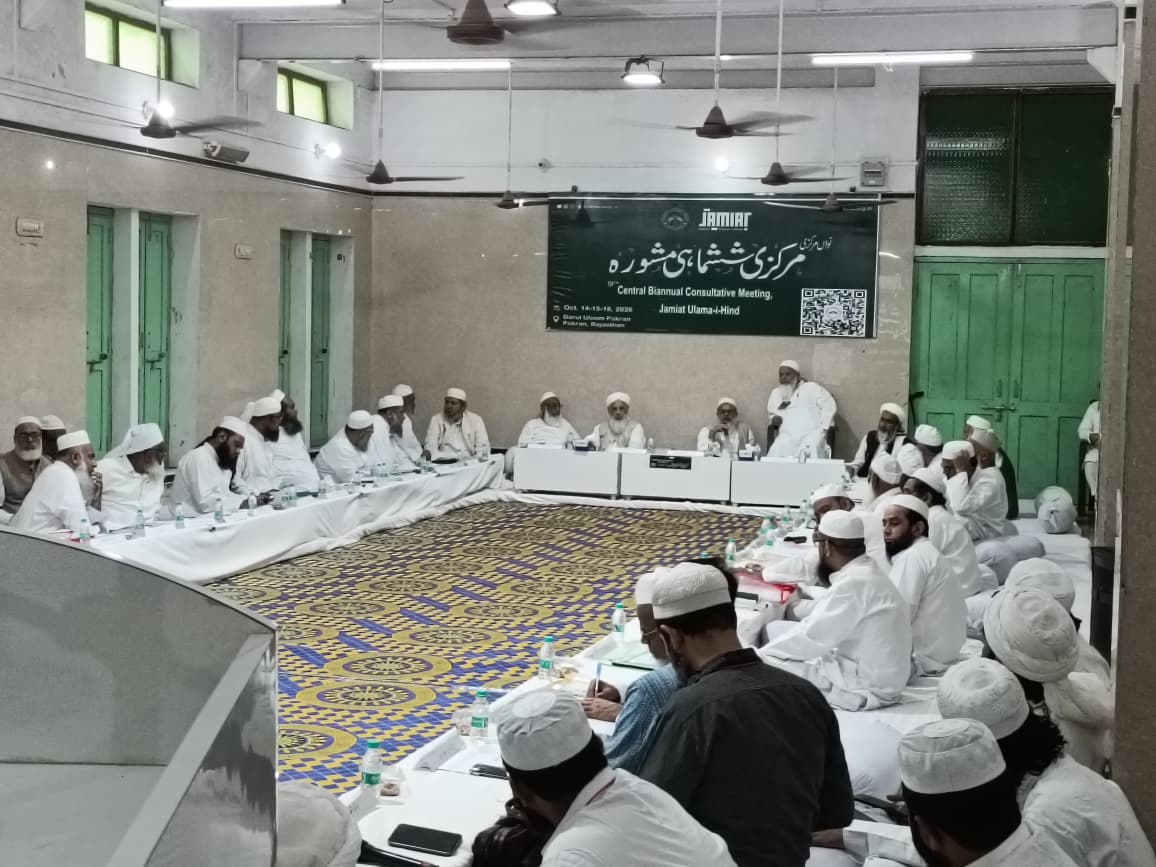
Addressing the gathering, Jamiat Ulama-i-Hind president Maulana Mahmood Asad Madani said service to the country and the community must remain the organisation’s foremost priority.
He called on office-bearers to work with greater commitment, strengthen activities at the grassroots and create opportunities for young people to assume leadership responsibilities.
Reviewing the organisation’s performance, Maulana Madani said that although progress had been made across several departments, the needs of the community and the responsibilities before the organisation required sustained effort, sincerity and determination.
He stressed that personal recognition and positions should not take precedence over service to the community. Referring to the sacrifices of earlier generations, he said they had continued their work with resolve despite limited resources and difficult circumstances. The present generation, he said, must carry forward their legacy of sincerity, selflessness and dedication.
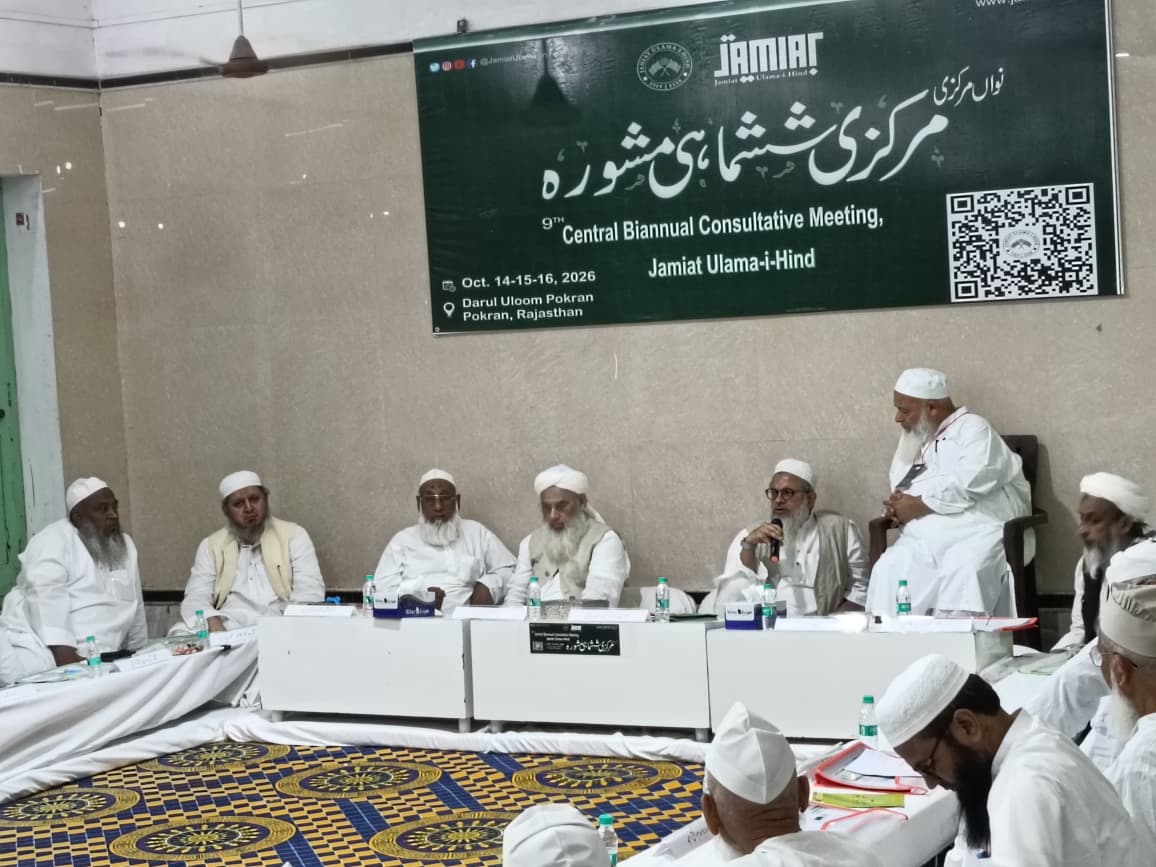
Emphasising the importance of developing future leadership, Maulana Madani said young people should be given meaningful opportunities, entrusted with responsibilities and trained to become capable successors to the present generation of office-bearers.
This, he said, would help extend the organisation’s message and constructive activities to villages and local communities across the country. He also called for bringing together like-minded people to work towards common objectives concerning the community.
Jamiat vice-president Maulana Muhammad Salman Bijnori said organisational work should be undertaken for the sake of Allah rather than personal fame, publicity or self-interest. The value of a task, he said, lay in the sincerity with which it was performed, regardless of its scale.
Religious education and social reform
The performance reports presented at the consultation highlighted the organisation’s activities in religious education, social reform, youth engagement and community development during the April–October 2026 reporting period.
According to the reports, more than 63,000 religious maktabs are already functioning through the organisation’s network. During the past six months, 5,352 additional maktabs were established, with a target of establishing another 5,332 in the next six months.
Darse Qur’an were started at 5,860 new locations and Darse Hadith at 8,848 new locations, taking the total number of new locations for the two activities to 14,708.
Under the Islah-e-Muashra (social reform) programme, 7,351 gatherings were organised to promote moral development, social reform and the avoidance of wasteful expenditure. The target for the next six months is 8,383 gatherings.
The Rafiq programme, which seeks to engage young people in organisational activities and community service, brought 9,400 youths into its network. The organisation has set a target of connecting another 9,753 young people with the programme.
A total of 1,806 model mosques were reported to have been established to strengthen the role of mosques as centres of religious guidance and social engagement. The target for the next six months is 2,556.
The Sadbhavna Manch organised 356 programmes to promote national integration, mutual understanding and communal harmony. The target for the next phase is 1,091 programmes.
Under Jan Vikas Seva, 484 villages were selected for social and educational development initiatives. Another 748 villages are proposed to be covered during the next six months.
The organisation also reported conducting 115 training workshops to strengthen its organisational structure and improve the capacities of its workers. It has set a target of 386 workshops for the next six months. In addition, more than 5,000 organisational meetings were held during the reporting period.
Focus on maktabs and basic religious education
During a dedicated session, Jamiat Ulama Uttar Pradesh president Maulana Mufti Syed Muhammad Affan Mansoorpuri presented proposals concerning the Deeni Taleemi Board and the expansion of the maktab network.
He highlighted the importance of strengthening basic religious education, establishing new maktabs, training teachers and ensuring effective monitoring of educational activities. The responsibilities of provincial units and the practical targets to be pursued in the coming months were also discussed.
The consultation reviewed the achievements and challenges of different departments and discussed measures to improve coordination and the effectiveness of the organisation’s social initiatives.
Among the proposals approved were the further development of model mosques, the formation of an Islah-e-Muashra committee in every organisational unit and the establishment of family counselling centres in selected model districts.
Departmental reports and presentations were made by Owais Sultan Khan (JEM), Mufti Mahdi Hasan Aini (Sadbhavna Manch), Dr Shabbir Mushtaq Mir (Khair App and training report), Maulana Muhammad Akhlaq (Rafiq) and Maulana Muhammad Umar Qasmi (Islah-e-Muashra, model mosques and app-related initiatives).
Jamiat Ulama-i-Hind secretary Maulana Niaz Ahmad Farooqi briefed the participants on paralegal training. Jamiat Ulama-i-Hind general secretary Maulana Muhammad Hakimuddin Qasmi presented the proceedings of the previous meeting, while Mufti Fazluddin Qasmi, a teacher at Darul Uloom Islamia, Pokaran, delivered the welcome address on behalf of the host institution and Jamiat vice-president Maulana Qari Muhammad Amin, its Muhtamim.
The various sessions were chaired by Jamiat vice-presidents Maulana Muhammad Salman Bijnori and Maulana Qari Muhammad Amin, Majlis-e-Qaima president Mufti Rahmatullah Mir Kashmiri, Karnataka Jamiat president Mufti Iftikhar Ahmad Qasmi and Assam Jamiat vice-president Maulana Abdul Qadir.
Mohammad Azeemullah Siddiqui
Secretary, Publicity and Publications Department
Jamiat Ulama-i-Hind