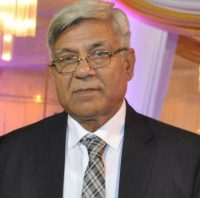
From a Public Health Physician to America’s First Muslim Senator: The Double-Doctorate Journey of Dr Abdul Rehman Mohammad Abdul El-Sayed and the Emergence of a New Political Era
An Egyptian-American son of immigrants, an Oxford Rhodes Scholar and a progressive political leader, Abdul El-Sayed’s historic victory in Michigan may represent more than an electoral breakthrough. It raises important questions about America’s changing political landscape, the future of Palestinian statehood and the evolving geopolitical equations of the Middle East.
An extraordinary political journey
There are electoral victories and then there are victories that acquire significance far beyond the constituency in which they are achieved. The election of Dr. Abdulrahman Mohamed El-Sayed to the United States Senate belongs to the latter category.
Born and raised in Michigan to Egyptian immigrant parents, El-Sayed has become the first Muslim ever elected to the US Senate. His victory over Republican candidate Mike Rogers in the November 3, 2026 election is particularly significant because it comes at a time when the Middle East remains deeply troubled by war, humanitarian suffering and the unresolved Palestinian question.
His election is not merely a personal accomplishment or a symbolic milestone for Arab-American and Muslim communities. It represents the growing electoral confidence of a diverse constituency and demonstrates that a candidate can openly acknowledge his cultural and religious identity while campaigning on issues affecting the entire American electorate.
Interestingly, El-Sayed often begins introducing himself with a smile and his complete name, Abdul Rehman Mohamed El-Sayed. What might appear to be a simple personal introduction has acquired a wider significance in a political environment where questions of identity, belonging and loyalty have frequently been exploited for electoral purposes.
An academic and professional journey beyond ordinary credentials
His academic qualifications include a DPhil in Public Health from Oxford and an MD from Columbia University. He also earned a PhD in Epidemiology from Columbia. His academic achievements reflect a sustained engagement with public health, epidemiology and the social determinants of human wellbeing.
He subsequently served as Executive Director of the Detroit Health Department and later headed Wayne County’s Department of Health, Human and Veterans Services. His professional experience has shaped his conviction that healthcare, economic security, education and environmental conditions are inseparable from the overall health of society.
The electoral mandate: A victory beyond identity politics
El-Sayed’s victory was achieved against a formidable Republican opponent, Mike Rogers, a former congressman and FBI agent who enjoyed the support of President Donald Trump and prominent Republican campaign machinery.
The Associated Press projected El-Sayed’s victory on November 4. The available election results showed him securing approximately 52.5 per cent of the vote against Rogers’ 45.5 per cent, with more than 2.5 million votes in his favour. The result is particularly noteworthy because Michigan is a politically competitive state and Donald Trump had carried it in the 2024 presidential election.
The campaign was not without controversy. El-Sayed faced personal attacks, questions about his religious identity and allegations of associations with extremist organisations, which he denied. His position on American military assistance to Israel and his criticism of Israeli actions in Gaza also became major campaign issues.
Yet, his message on healthcare, the cost of living, corporate influence, economic justice and democratic accountability resonated with a substantial section of the electorate. The result demonstrates that religious and ethnic identity need not become a political liability when a candidate successfully connects with voters through an inclusive programme addressing their everyday concerns.
His vision and the principal policy priorities in the service of people, include:
What deserves particular attention is not simply the historic character of El-Sayed’s election but the policies he has advocated throughout his campaign. His political programme revolves around three broad commitments: getting money out of politics, putting money into people’s pockets and establishing Medicare for All.
Healthcare for all: He advocates universal Medicare coverage, including essential medical, dental, vision and hearing services, without premiums, copayments or deductibles.
Economic justice and affordable living: His programme emphasises fair wages, affordable housing, protection of workers’ bargaining rights, support for small businesses and a more equitable distribution of economic opportunities. He has also advocated higher taxation of billionaire wealth.
Education and employment: His proposals include universal childcare and pre-kindergarten, better compensation for public-school teachers, stronger educational infrastructure and a tuition-free, debt-free pathway to higher education, apprenticeships and vocational training.
Democratic accountability: He wants to restrict corporate influence over elections, address gerrymandering, make voting more accessible and pursue institutional reforms, including Supreme Court reform.
Environment and public health: Clean drinking water, the replacement of lead service lines, action against PFAS contamination and stronger public-health institutions form an important part of his agenda.
Civil liberties and social inclusion: His platform places emphasis on civil rights, immigration, equal opportunity and protecting the rights of vulnerable communities.
Palestine and the challenge of a more balanced American foreign policy
Perhaps the most internationally consequential dimension of El-Sayed’s politics is his position on Palestine and American policy towards Israel.
He has consistently questioned the use of American taxpayers’ money to finance Israeli military operations and has strongly criticised the humanitarian consequences of the war in Gaza. He has also challenged the apparent double standards in the application of international law and human rights.
In his public exchanges, he has drawn attention to an important asymmetry: American political leaders are frequently asked whether Israel has a right to exist, while the right of Palestine to exist as a sovereign state receives comparatively less attention.
His position makes the Palestinian question an important component of his political agenda rather than a peripheral issue of identity or community sentiment. What his presence can potentially change is the nature of political debate, the scrutiny of military assistance and the willingness to question policies that have traditionally enjoyed bipartisan support.
The significance of his address at the CONNECT Arab America Empowerment Summit
One of the important occasions following his election was his appearance at the CONNECT Arab America Empowerment Summit in Chantilly, Virginia, on November 6, 2026.
Speaking at a gathering devoted to Arab-American leadership, identity, public service and empowerment, El-Sayed highlighted the importance of Arab Americans recognising their shared identity and participating confidently in the political and civic life of the United States. His remarks acquired additional significance because they came immediately after his historic electoral victory.
He also used the occasion to introduce himself by his full name and reflect upon the relationship between identity and public representation. His message was not that Arab Americans should remain confined to community politics, but that their participation should help shape the wider American political and democratic landscape.
An interesting controversy followed his election-night address. The Free Press published a video incorrectly suggesting that El-Sayed had delivered his victory speech in Arabic. The publication subsequently issued a correction, acknowledging that the speech was predominantly in English and contained only four Arabic words as 0.27% of the speech’s total word count.
The episode illustrates how even a few expressions of cultural identity can become subjects of disproportionate political controversy. His use of expressions such as Insha’Allah, Alhamdulillah and the affectionate Habibi was, for many supporters, a natural expression of his background rather than a rejection of his American identity.
Israel’s political transformation: The opportunity before Gadi Eisenkot
The developments in Israel following the October 27, 2026 Knesset elections provide another important dimension to this changing political landscape. Gadi Eisenkot’s opposition bloc secured 48 seats, while the Arab-led parties achieved a historic combined tally of 19 seats. These results represent a substantial setback for Netanyahu’s political camp and an unprecedented parliamentary achievement for Arab-led parties.
On November 8, President Isaac Herzog formally entrusted Eisenkot with the responsibility of forming the next government. Eisenkot has expressed his intention to establish a broad national emergency government to address Israel’s security, political and diplomatic challenges. The 19 Arab representatives occupy potentially a decisive position. Their participation, or support from outside the government, could prove crucial in determining Israel’s next political direction.
A changing Middle East and the prospects for Palestine
The developments in Washington, Michigan and Israel should not be examined in isolation; rather, they should be viewed as part of a broader convergence of strategic opportunities emerging amid the wider geopolitical transformations taking shape in the Middle East. The US-Saudi defence deal in November 2025 marked an important development in this evolving landscape. Subseque…
the Saudi Arabia–Türkiye–Pakistan Joint Defence Agreement, signed in August 2026, added another significant dimension to regional security cooperation. Meanwhile, shifting diplomatic calculations and the continuing search for regional stability are opening up new possibilities for engagement, strategic realignment and cooperation among influential regional powers.
For the Palestinian people, the convergence of these political developments offers a potentially more conducive environment for renewed international engagement than has existed ever in the past.
People close to Eisenkot suggest that, from the very first day of assuming office, he would seek a significant shift in Israel’s approach towards the Palestinians. His priorities are expected to include improving overall humanitarian conditions in Gaza, facilitating Palestinian civilian welfare, curbing settler violence in the West Bank, removing unauthorised outposts and restoring the Palestinian Authority’s role in civilian governance. A departure from Netanyahu’s hardline policies
A meaningful change in Israeli policy would require the next government to recognise that lasting security cannot be achieved through military dominance or the indefinite denial of Palestinian political rights.
A moment of opportunity
The election of Abdul El-Sayed in the United States and the parliamentary breakthrough of Arab-led parties in Israel are two distinct developments. They should not be treated as evidence of a coordinated political movement Yet, their simultaneous emergence is politically significant. An Arab-American Muslim entering the United States Senate, with an agenda centred on social justice, democratic accountability and a more critical examination of American foreign policy, represents a new dimension of political participation.
Similarly, the unprecedented parliamentary strength of Arab-led parties in Israel creates an opportunity to challenge established political assumptions and reconsider the country’s approach towards its Arab citizens and the Palestinians.
For the first time in many years, developments on both sides of the Atlantic and within the Middle East appear to offer a convergence of political opportunities.
Whether this becomes the beginning of a genuine movement towards peace, justice and Palestinian statehood will depend upon the courage of political leadership and willingness of the international community to translate its declarations into action.