Speaking on arrival, Araghchi said his visit was aimed at maintaining “close consultations” between Tehran and Moscow on regional and international issues, adding that his meeting with Putin would help review the latest developments in the war and explore the fragile path toward peace.
The visit comes just after his Muscat consultations with Omani officials, showing that Iran is still moving from one capital to another in search of support, while a lasting solution remains elusive.
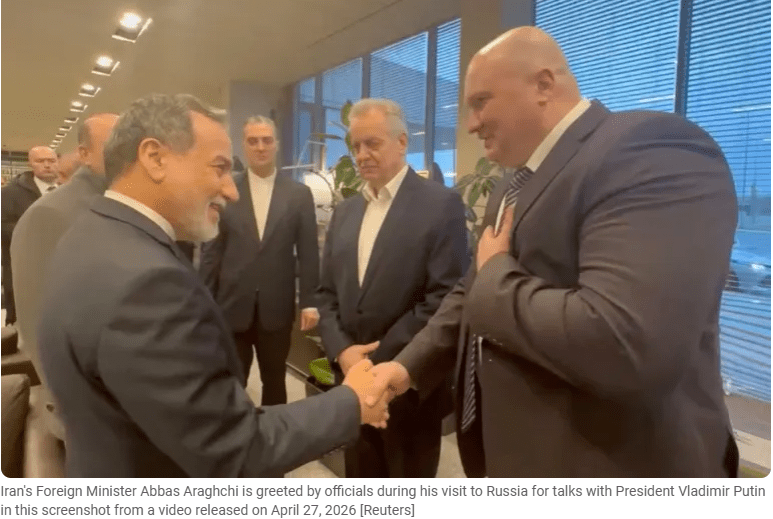
Although Washington and Tehran agreed to a temporary ceasefire on April 8 after weeks of intense fighting triggered by US and Israeli strikes on Iran, the truce has remained shaky from day one. Disputes over the Strait of Hormuz, the US naval blockade on Iranian ports, and the parallel Israel-Lebanon tensions have all exposed how fragile this so-called ceasefire really is.
Russia, meanwhile, is trying to position itself as both a strategic ally and a diplomatic broker. Putin assured Araghchi that Moscow would continue to stand firmly with Iran, promising to act in the interests of regional peace.
However, critics argue that Russia’s support often comes with strategic calculations of its own, and not necessarily a quick resolution for Tehran.
Adding to the uncertainty, US President Donald Trump cancelled plans to send envoy Steve Witkoff and adviser Jared Kushner to Islamabad for talks, blaming “infighting and confusion” within Iran’s leadership — a remark that underlines Washington’s growing frustration with Tehran’s internal divisions.
Iranian President Masoud Pezeshkian has insisted that no fresh negotiations will happen while the American blockade remains in place, as US Central Command continues to restrict Iranian maritime access.
Pakistan, which helped mediate the temporary truce, is still trying to keep diplomacy alive. Officials in Islamabad say there is cautious hope for a broader framework involving not just Iran and the US, but also Gulf countries.
Yet the bigger question remains: is diplomacy genuinely moving forward, or is this just another round of meetings while the region stays trapped between ceasefire headlines and the constant threat of another war?

