New York: The contrast on New York City’s primary night could hardly have been sharper. Outside Representative Adriano Espaillat’s election-night gathering, a handful of supporters dressed in bright neon sequins attempted to energize a subdued crowd.
Inside, the atmosphere remained muted as Espaillat, after decades of political work that took him from local politics to Washington, arrived briefly to deliver a concession speech before departing within minutes.
Just a few miles away, however, the mood was entirely different. There, Zohran Mamdani was celebrating a string of victories alongside candidates whose political fortunes were significantly boosted by his endorsement.
The scene underscored how dramatically New York’s political landscape has shifted since Mamdani’s surprise victory over Andrew Cuomo in last year’s Democratic mayoral primary.
Addressing supporters, Mamdani declared that his breakthrough victory was not a one-time event but the beginning of a broader political movement.
“We are showing that last June was not an anomaly,” he said. “It was not the end. It was the beginning.”
The latest election results suggest that Mamdani has evolved from insurgent candidate to one of the most influential figures in New York Democratic politics. His growing influence is reshaping power dynamics within the party and challenging leaders who have long dominated the state’s political establishment.
Among those facing increasing pressure is Hakeem Jeffries, whose political network has suffered setbacks with the loss of incumbent allies and the rise of a new generation of progressive activists aligned with Mamdani’s agenda.
Yet Mamdani’s rapid ascent has also generated resentment among some former supporters and Democratic insiders. Critics within New York’s political circles argue that his approach to coalition-building leaves little room for dissent and that partnerships are often expected to operate on his terms.
According to individuals familiar with discussions inside the City Council, some lawmakers who once viewed themselves as Mamdani’s allies now feel marginalized and politically sidelined. Frustrations have reportedly led to conversations about ways to challenge his agenda, ranging from delaying funding proposals to applying pressure through procedural and political means.
As Mamdani consolidates power, New York Democrats appear increasingly divided between those who see him as the future of the party and those who view his growing influence as a threat to the coalition that has long governed the city’s politics.
The struggle reflects a broader battle over the direction, leadership and identity of the Democratic Party in one of America’s most influential political arenas.
Mamdani and those closest to him say: This is what a revolution looks like, on his terms. He elevated a former campaign volunteer in Avila Chevalier, with a long record of inflamatory tweets and attendance at a widely decreid rally the day after Hamas’ October 7, 2023, attacks, and propelled her toward Congress over the chairman of the Congressional Hispanic Caucus.
That’s even after Espaillat endorsed Mamdani last year after his primary victory over Cuomo when other Democrats wouldn’t. Two people familiar with the mayor’s thinking say that he was initially skeptical of Avila Chevalier’s chances to win. But in a quietly convened City Hall meeting of democratic socialists and other allies, he decided to get on board.
Asked after the race was called for Avila Chevalier, giving Mamdani his trifecta, if the mayor would work to rebuild bridges after these primary fights or now people would have to come to him, Bahr’s response was a succinct text: “:).”
Mamdani, an avowed New York Knicks fan, posted a clip of superstar guard Jalen Brunson speaking at the team’s recent championship celebration.
“There’s a lot of people that have a lot of negative stuff to say. There’s a lot of people who have a lot of opinions,” Brunson says in the clip. “But when you prove them wrong, you don’t have to say shit to them.”
How Mamdani Set His Sights on Democratic Incumbents
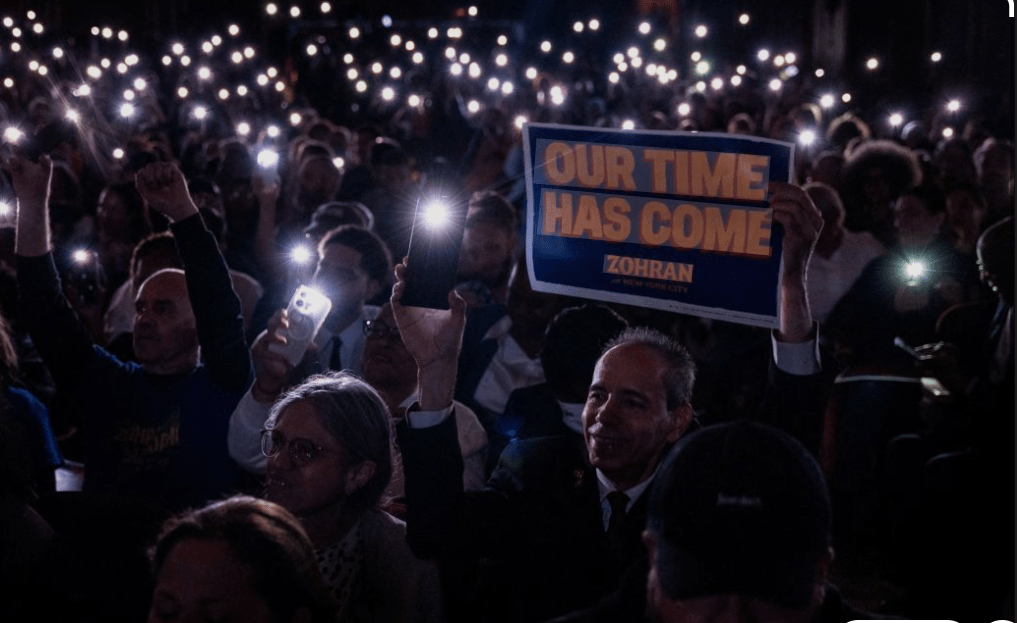
Not long after his breakthrough victory last year, Zohran Mamdani’s growing political influence began to concern key figures within New York’s Democratic establishment.
According to two sources familiar with the conversations, House Democratic Leader Hakeem Jeffries privately conveyed a blunt message to Mamdani’s advisers: if they intended to challenge sitting Democratic lawmakers, they should target him directly rather than undermine other incumbents.
The remark reflected mounting tensions between the party’s traditional leadership and an emerging progressive faction increasingly aligned with Mamdani. As his political network expanded, concerns grew among establishment Democrats that his movement was no longer focused solely on winning elections but on reshaping the party’s internal power structure.
Jeffries’ message underscored the seriousness with which Democratic leaders viewed Mamdani’s rise and the potential threat it posed to long-established political alliances within New York’s Democratic Party.
Mamdani Spared Jeffries While Challenging Other Democrats
Initially, however, Zohran Mamdani appeared reluctant to confront House Democratic Leader Hakeem Jeffries directly.
According to political observers, Mamdani intervened behind the scenes to prevent a potential primary challenge against Jeffries by New York City Council member Chi Ossé. The move surprised some of Mamdani’s progressive allies, as he reportedly helped persuade the local chapter of the Democratic Socialists of America (DSA) not to back a challenge against Jeffries, who had long maintained cordial relations with sections of the progressive movement.
Mamdani later reinforced that position during an appearance on NBC’s Meet the Press, where he publicly stated that he would support Jeffries for Speaker of the House should Democrats regain control of Congress.
The decision has fueled questions about Mamdani’s political strategy. While he has supported efforts to unseat or challenge certain Democratic incumbents, he has notably avoided backing a direct challenge to one of the party’s most powerful figures.
Asked by CNN on Tuesday why he believed Mamdani was willing to take on other Democratic lawmakers but not support a potential campaign against Jeffries, Ossé declined to speculate.
“I don’t have an answer on that,” he said.
The episode highlights the delicate balance Mamdani is attempting to maintain—expanding his influence within the Democratic Party while avoiding a direct confrontation with its highest-ranking congressional leader.
credit: Edward Isaac Dovere CNN