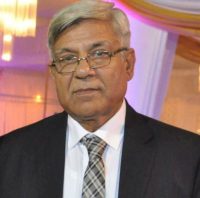
Beyond Bravery and Blame: A Call for Wisdom in Times of War (Human Life is Above All)
Public memory is often short but conscience is not. I was among the first to condemn the attack on Iran; my message circulated in my WhatsApp groups at 3:43 PM on February 28 stands as proof. I did so not out of political alignment, but out of principle. Out of 116 articles I have written 46 in Urdu and 70 in English one idea consistently emerges: human life is sacred.
When I say “human,” I mean every human being, regardless of status, nationality, sect, or belief whether a king or the most downtrodden soul. In my view, human life is the most precious trust on earth.
I detest nothing except violence whether physical aggression or verbal hostility. I believe in forgiveness and reconciliation. When I am wrong, I do not hesitate to apologise the moment I realise my mistake. Sadly, such reciprocity is rare. Too often, restraint is mistaken for weakness. Yet I maintain what I have always said, I hate nothing except violence.
Having said that, moral clarity requires intellectual honesty. The ongoing conflict is not a tale of heroism; it is, in many respects, a tragic culmination of strategic miscalculations and political arrogance. What some describe as “bravery” may, in reality, be reckless adventurism. No Arab or Muslim country can be fairly held responsible for the hostility that Iran now faces from multiple quarters or for the degree of diplomatic isolation it experiences today.
For years, Iran has projected its military prowess often with deliberate emphasis on deterrence and regional influence. There is no denying its capabilities. Among sections of the Shia community worldwide, faith in Iranian leadership has, at times, assumed an almost sanctified aura.
Social media narratives in recent years have amplified carefully curated images of figures such as Ali Khomeini, portraying him in moments of prayer, humility and benevolence, reinforcing a perception of exceptional piety and moral authority. While personal devotion deserves respect, governance demands more than symbolism. Statesmanship requires prudence, foresight and an acute awareness of consequences.
Everything I have written in the past has been grounded in verifiable facts and supported by references. I rarely express opinions without evidence and I remain accountable for my words. My concern today is not to assign blame for its own sake, but to urge sober reflection.
The past nine months have been devastating for Iran. Since the reported precision strikes beginning on June 25, which resulted in the deaths of 20 senior officials, the country has witnessed an unprecedented escalation of turmoil. This was followed by extraordinary mass protests on the streets of Tehran and other major cities, during which thousands were reportedly killed in clashes with security forces.
Now, most tragically, 48 top officials including the Supreme Leader have reportedly fallen victim to this widening conflict. Regardless of political affiliations, such losses constitute a profound national trauma. No nation emerges stronger from the decapitation of its leadership.
Yet even amid grief and uncertainty, we must resist the temptation to embrace exaggerated fears. The notion that Israel will evolve into a so-called “Greater Israel,” incorporating the Gulf Cooperation Council (GCC) states, allegedly with identical designs supported by the United States, is more speculative rhetoric than strategic reality.
History demonstrates that wars often end not with maximalist ambitions fulfilled, but with recalibrated boundaries and exhausted societies seeking stability.
As Muslims, our primary concern should not be the triumph of one state over another, but the preservation of life, dignity and regional stability. We should sincerely pray that a pragmatic and progressive leadership emerges within Iran, one capable of introspection rather than defiance for its own sake.
The first task of any new leadership must be honest self-assessment: Where did we go wrong ? Was it in the relentless drum-beating of self-declared invincibility ? Or in neglecting the necessity of constructive engagement with the international community?
True strength lies not in rhetoric, but in wisdom. Not in isolation, but in balanced diplomacy. And not in vengeance, but in safeguarding the lives of one’s people. History will judge leaders by the lives they protect, not the slogans they proclaim.

