


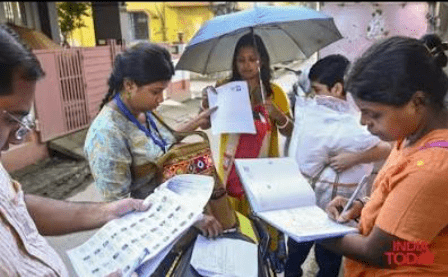
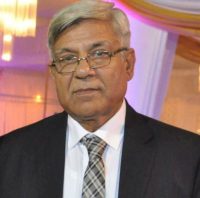
A point-by-point rebuttal to Dr Parakala Prabhakar’s deeply troubling hypothesis that the Special Intensive Revision (SIR) could become a precursor to the political disenfranchisement of Muslims, Christians, SCs, STs, OBCs and other vulnerable sections of Indian society.
Dr Prabhakar, an eminent economist and political commentator who has also served as Communications Advisor to the Government of Andhra Pradesh and I have considerable respect for him.
He has raised serious concerns about the possible consequences of SIR. His apprehensions deserve to be examined with due seriousness; however, concern must not be allowed to become a substitute for evidence.
There is a fundamental difference between identifying genuine vulnerabilities in the implementation of an electoral exercise and concluding that the exercise itself is designed or destined to produce a particular political outcome. It is this distinction that needs to be carefully examined, rather than accepting the more alarming hypothesis without adequate empirical evidence.
I must respectfully disagree with the leap from those legitimate concerns to his extraordinarily grave proposition that the Special Intensive Revision (SIR) could be a precursor to what he describes as a “bloodless political genocide.”
My disagreement should not be misunderstood as a defence of the present ruling establishment. I have reservations about several aspects of the political direction of the country, particularly wherever I believe India’s plural, constitutional and secular character is under pressure.
Precisely for that reason, however, I believe that allegations of this magnitude must be established by evidence rather than political inference.
There is a perfectly legitimate argument that SIR can produce wrongful exclusion. A genuine voter may be missed during enumeration, may not receive or understand a notice, may lack easy access to supporting documents, or may simply remain unaware that his or her name has disappeared from the electoral roll. That is a serious democratic problem. But three propositions must not be conflated:
First: SIR may result in wrongful deletion.
Second: vulnerable communities may suffer disproportionately from such errors.
Third: SIR is therefore deliberately designed as a precursor to the political elimination of those communities.
The first proposition is demonstrably possible. The second is an empirical proposition which can and should be investigated. The third is an extraordinarily serious allegation requiring evidence of design, intent, discriminatory criteria or systematic discriminatory implementation. A large number of deletions, by itself, proves none of these.
It is difficult to sustain the proposition that the very concept of SIR is inherently a BJP political instrument. That does not, however, mean that the present implementation cannot be criticised. The relevant question is a different one: Has the present methodology of SIR created new and unacceptable risks of disenfranchisement, and are adequate safeguards in place to prevent them ? That question deserves vigorous public scrutiny.
Deletion is not the same as permanent disenfranchisement
This distinction is particularly important. The Election Commission’s present voter-services system provides mechanisms for registration, correction, electoral-roll searches, application tracking, appeals and other voter services.
Its SIR portal also provides facilities to search one’s name in the previous SIR roll and to submit documents against a notice. The existence of these mechanisms does not prove that the system works perfectly. But it does mean that the headline figure of “names deleted” cannot by itself be treated as the final number of people permanently disenfranchised. The more meaningful questions are:
How many were deleted ? Why were they deleted ? How many were genuine eligible voters ? How many filed claims or objections?How many were restored ? How many remained excluded from final electoral roll ?
Until these questions are answered, the political significance of a gross deletion figure remains uncertain.
Where Prabhakar’s argument becomes strongest
There is, however, one aspect of his argument that I believe deserves very serious attention. Suppose a genuine voter is wrongly deleted. That voter does not discover the problem. The voter therefore does not file a claim. The next electoral revision begins with the reduced database. The person’s absence then becomes increasingly difficult to detect.
If this happens repeatedly and disproportionately to particular communities, the cumulative effect could indeed be politically significant. This is not an absurd hypothesis. But it is still a hypothesis. It can be tested.
The answer lies in longitudinal electoral-roll data: comparing successive rolls and tracking what happened to electors who disappeared from one roll to the next. If evidence demonstrates persistent wrongful exclusion, Prabhakar’s warning acquires considerable force.
If the overwhelming majority of deletions are subsequently corrected or are attributable to legitimate reasons such as death, permanent migration or duplicate registration, the argument becomes substantially weaker.
The “two classes of Indians” proposition
Prabhakar has also warned that SIR could create “two classes of Indians”: those who retain voting rights and those who lose them. The political metaphor is powerful, but it requires some constitutional qualification.
Citizenship and electoral registration are not identical concepts. The ECI states that an Indian citizen who has attained 18 years of age and is otherwise eligible can be registered as an elector in the constituency where he or she is ordinarily resident. Consequently, wrongful deletion of an eligible elector can deprive that person of the ability to exercise the franchise.
That is undoubtedly serious. But it does not legally transform that person into a “second-class citizen.” The better formulation would therefore be: Wrongful exclusion can create a class of citizens who are temporarily or effectively deprived of their electoral voice. That is serious enough. There is no need to stretch the constitutional description further.
What about SCs, STs, OBCs, Christians and Muslims ?
This is where the debate must move from rhetoric to statistics. If Prabhakar’s hypothesis is that SIR will disproportionately eliminate members of particular communities from the electorate, then there should eventually be measurable evidence.
We need to know: Community profile → deletion rate → reason for deletion → claim rate → restoration rate → final exclusion. Suppose Muslims have a deletion rate substantially higher than comparable non-Muslim populations. That would deserve investigation.But even then, we must ask why ?
Urban Muslim populations may, for example, have distinctive patterns of rental accommodation, migration and address changes. Similar questions can arise among migrant workers, tenants and economically vulnerable groups irrespective of religion.
The proper scientific comparison would be between populations with comparable demographic and residential characteristics.
Telangana provides an excellent test case
This is precisely why the allegations concerning Telangana should be investigated rather than either dismissed or automatically accepted. If certain Hyderabad constituencies are alleged to have suffered exceptionally high deletions, the investigation should proceed booth by booth. We should compare:
previous electoral roll↓ pre-SIR roll↓ enumeration↓ draft roll ↓ claims and objections↓ final roll. Then classify deletions by the available official reasons:
deceased; permanently shifted; duplicate; untraceable; otherwise ineligible; objection/ Form 7; other prescribed category.
We should then calculate the restoration rate.
This would tell us infinitely more than political speeches on either side. The ECI itself currently makes SIR electoral-roll data and search facilities available through its citizen portal, including facilities for accessing electoral-roll material and searching names in the previous SIR roll.
The word “genocide” needs an exceptionally high threshold
I am particularly uncomfortable with using the term “genocide” in an electoral debate. Prabhakar’s phrase “bloodless political genocide” is rhetorically striking and undoubtedly intended to communicate the seriousness of the perceived danger.
But genocide is an extraordinarily grave concept. To establish that SIR is a precursor to the political genocide of a community would require considerably more than evidence that large numbers of names have been deleted. One would need evidence of:
deliberate targeting; discriminatory policy or instructions; systematic application against particular communities; persistent disproportionate exclusion; and an identifiable political objective behind the process.
Without such evidence, the phrase remains a political hypothesis, however sincerely held.
Equally, the ECI cannot demand blind trust
There is another extreme that I reject just as strongly. The fact that the Election Commission is a constitutional institution does not mean that citizens should accept every administrative decision without scrutiny.
Constitutional institutions derive strength from transparency and accountability, not merely from constitutional status. The ECI’s own stated objective is that electoral rolls should include all eligible citizens and exclude those who are not eligible.
Its 2025 SIR order expressly states that electoral-roll preparation must ensure that “all eligible citizens are included” and that no eligible citizen is excluded. That principle should be treated as a binding democratic commitment. If implementation falls short, citizens have every right to demand answers.
Therefore, let us test the hypothesis
I would propose a simple democratic test. If SIR is genuinely being used to selectively reshape India’s electorate, the pattern should be visible in the data. Let the Election Commission publish, transparently:
constituency-wise deletions;
booth-wise deletions;
category-wise reasons;
claims and objections;
notices issued;
hearings conducted;
names restored;
names finally excluded;
appeals filed and outcomes;
comparable data from previous revisions.
Then let independent researchers, political parties, journalists and civil-society organisations analyse the results. If the evidence demonstrates systematic discriminatory exclusion of Muslims, Christians, SCs, STs, OBCs or other vulnerable groups, the country must confront that evidence without hesitation. But if the evidence does not establish such a pattern, political suspicion cannot be converted into historical certainty.
My position is therefore neither pro-BJP nor pro-ECI
I am prepared to criticise the BJP government wherever its policies or political conduct deserve criticism. I am equally prepared to criticise the Election Commission if its procedures cause wrongful disenfranchisement or if it fails to provide adequate transparency. But I am unwilling to substitute political allegiance for evidence. The democratic choice should not be: “Trust the BJP.” Nor should it be: “Trust the ECI.” Nor should it be: “Believe that SIR is political genocide.” The democratic choice should be: SHOW US THE EVIDENCE.
If SIR is being misused, expose it. If genuine voters are being wrongfully excluded, restore them. If vulnerable communities are disproportionately affected, investigate and correct it. If the alleged pattern does not exist, let the evidence establish that too. That is not a defence of any political party. It is a defence of something far more important the principle that India’s electoral democracy must be protected both from wrongful exclusion and from unsupported allegations of deliberate political annihilation. And perhaps the most appropriate principle for the entire SIR controversy is this Maximum cleansing of electoral rolls, but no or minimum exclusion of genuine voters. Both objectives are legitimate. Neither should be sacrificed for political convenience.