


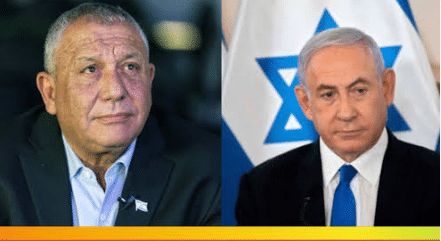
Israel’s Lapid Accuses Netanyahu Allies of Plotting to ‘Steal the Election’ as Political Crisis Deepens
Opposition leader warns of a threat to democracy as scrutiny of Arab political leaders sparks a fresh confrontation over election integrity
JERUSALEM, November 4, 2026 — Israeli opposition leader Yair Lapid has accused allies of Prime Minister Benjamin Netanyahu of attempting to undermine the country’s democratic process and overturn the political consequences of the October 27 parliamentary election. His warning comes amid growing controversy over a Shin Bet investigation into alleged foreign interference involving Arab political parties.
In a statement posted on X late Tuesday, Lapid alleged that elements within the security establishment were being used to challenge an electoral outcome that had weakened Netanyahu’s parliamentary position.
“What we are seeing tonight is an attempt to crush democracy and steal the election with the help of government plants in the security system,” Lapid wrote.
Describing the developments as a direct threat to Israeli democracy, he urged state institutions to resist political interference and called on opposition parties to put aside their differences and form a government as quickly as possible.
The allegations have intensified an already bitter political confrontation following an election in which Netanyahu’s right-wing bloc fell short of the parliamentary majority required to form a government independently.
Shin Bet investigation sparks controversy
The immediate trigger for Lapid’s warning was reporting by Israel’s public broadcaster Kan that Shin Bet chief David Zini had sought to question three Arab political leaders as part of an investigation into suspected foreign interference in the election.
The leaders reportedly include Mansour Abbas of the United Arab List, also known as Ra’am; Ahmad Tibi of the Arab Movement for Change; and Sami Abu Shehadeh of the Balad party.
According to the reports, investigators working under prosecutorial supervision found insufficient evidence to justify questioning the politicians. Attorney General Gali Baharav-Miara reportedly opposed treating the inquiry as a security case that would grant the Shin Bet broader investigative powers.
Netanyahu’s Likud party, meanwhile, accused the attorney general of obstructing the investigation.
The controversy centres on allegations that foreign actors, reportedly including Qatar, may have provided funding intended to increase Arab voter participation or influence the election. Qatar has rejected the accusations.
No publicly presented evidence has established that foreign interference altered the election outcome or that Arab political leaders orchestrated an unlawful campaign to manipulate the vote.
The distinction is significant: investigating a credible allegation of foreign interference is a legitimate responsibility of the authorities, but using unproven suspicions to cast doubt on an entire community’s votes would raise serious questions about democratic accountability.
Election results challenge Netanyahu’s political position
The October 27 election produced a fragmented parliament, leaving both major political blocs short of the 61 seats required for a majority in Israel’s 120-member Knesset.
The latest reported distribution gives Netanyahu’s bloc 53 seats, while the Jewish-led opposition bloc associated with Gadi Eisenkot holds 48. The two principal Arab-led electoral lists together secured 19 seats, placing them in a potentially influential position during coalition negotiations.
The strong performance of Arab parties has therefore become central to the political struggle over the next government.
Netanyahu and his allies have raised allegations of electoral fraud and foreign interference, while opposition figures have accused them of attempting to delegitimise an outcome that weakened their political position.
Israeli election officials have rejected claims of widespread electoral fraud. The acting director-general of the Central Elections Committee said the election had been conducted lawfully and that there was no basis for allegations of systematic violations.
The committee’s leadership has also indicated that the investigation into suspected foreign interference would not, on the evidence currently available, overturn the election results.
Lapid calls for opposition unity
Lapid’s intervention also reflects the urgency of coalition negotiations. By urging opposition parties to set aside their differences and form a government, he is seeking to turn the election results into a viable parliamentary alternative to Netanyahu.
However, the opposition faces its own political challenges. Its constituent parties differ on policy, leadership and the question of cooperation with Arab-led parties.
Although the combined parliamentary strength of the opposition and Arab lists could potentially support a majority, numerical arithmetic alone does not guarantee a workable coalition. Agreement on leadership, policy priorities and confidence-and-supply arrangements would be essential.
The outcome will depend on negotiations and the ability of the parties to establish a government capable of commanding the Knesset’s confidence.
A wider test for Israeli democracy
The dispute has raised broader questions about the relationship between national security, electoral legitimacy and minority political participation.
Security agencies have a duty to investigate credible evidence of unlawful foreign interference. Equally, allegations must be assessed through transparent legal procedures, and elected representatives must not be treated as guilty merely because they belong to Arab parties or represent Arab voters.
For Israel’s Arab citizens, whose parties secured a combined 19 seats, the controversy carries particular significance. Their votes are part of the electorate’s democratic choice, and any allegation of criminal conduct must be established through evidence rather than collective suspicion.
The coming days will test whether political leaders can distinguish a legitimate investigation from an attempt to delegitimise an inconvenient electoral outcome.
For Netanyahu, the immediate challenge is to establish a viable parliamentary majority amid the political fallout. For Lapid and other opposition leaders, it is to translate their combined electoral strength into a functioning government.
The central question is no longer simply who won or lost seats. It is whether the institutions responsible for protecting Israel’s elections can investigate allegations impartially while ensuring that unproven claims do not undermine the democratic rights of voters.